top of page

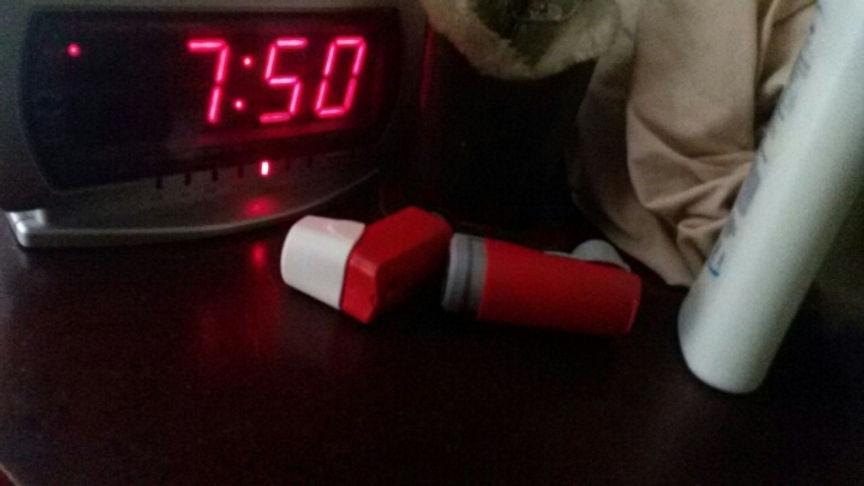
Chronic obstructive pulmonary disease is the number three killer in the US, after cancer and heart disease. Cigarettes smoking accounts for about half of the risk, but COPD also occurs in non-smokers, due to environmental conditions, low birth weight and other childhood factors. COPD affects 15 million individuals in the U.S. alone and is associated with worse quality of life, and reduced life expectancy. In the U.S., COPD disproportionately affects women, elderly, and individuals without a high-school diploma, unable to work or unemployed, or living in households with income less than $25,000/year.
We are hired to help out client understand the realities of home management of COPD that will be faced by their non-medically trained caregivers. they needs to build a training program that prepares caregivers to support these patients and their lived reality, not just their disease. So what are the needs, habits, expectations and challenges of patients living at home with COPD? How do patients formulate their practices and what is the role of others in building effective at-home practices?
Key words: communication design, models, coding and analysis
EXECUTIVE COPD CAREGIVER
DATA WE HAVE
The data I used came from 9 caregiver scouts. The caregiver scouts documented their experiences thought the form of diary. They were required to take pictures which are related to their caregiving experience and write down their thoughts according to the pre-defined questions in the diary. Totally, they collected 102 diary entries with photos and brief descriptions.
STRUCTURING "THE MESS"
To analyze the data we had, I used grounded theory to guide my coding process. I was trying to find interesting insights and relationships between them through the process.

MODELING "THE MESS"
After the coding process, I used two different models to structure my insights which came from the coding process. Those models can both help me to think and engage stakeholders.


BUILDING ORGANIZATIONAL "PULL"
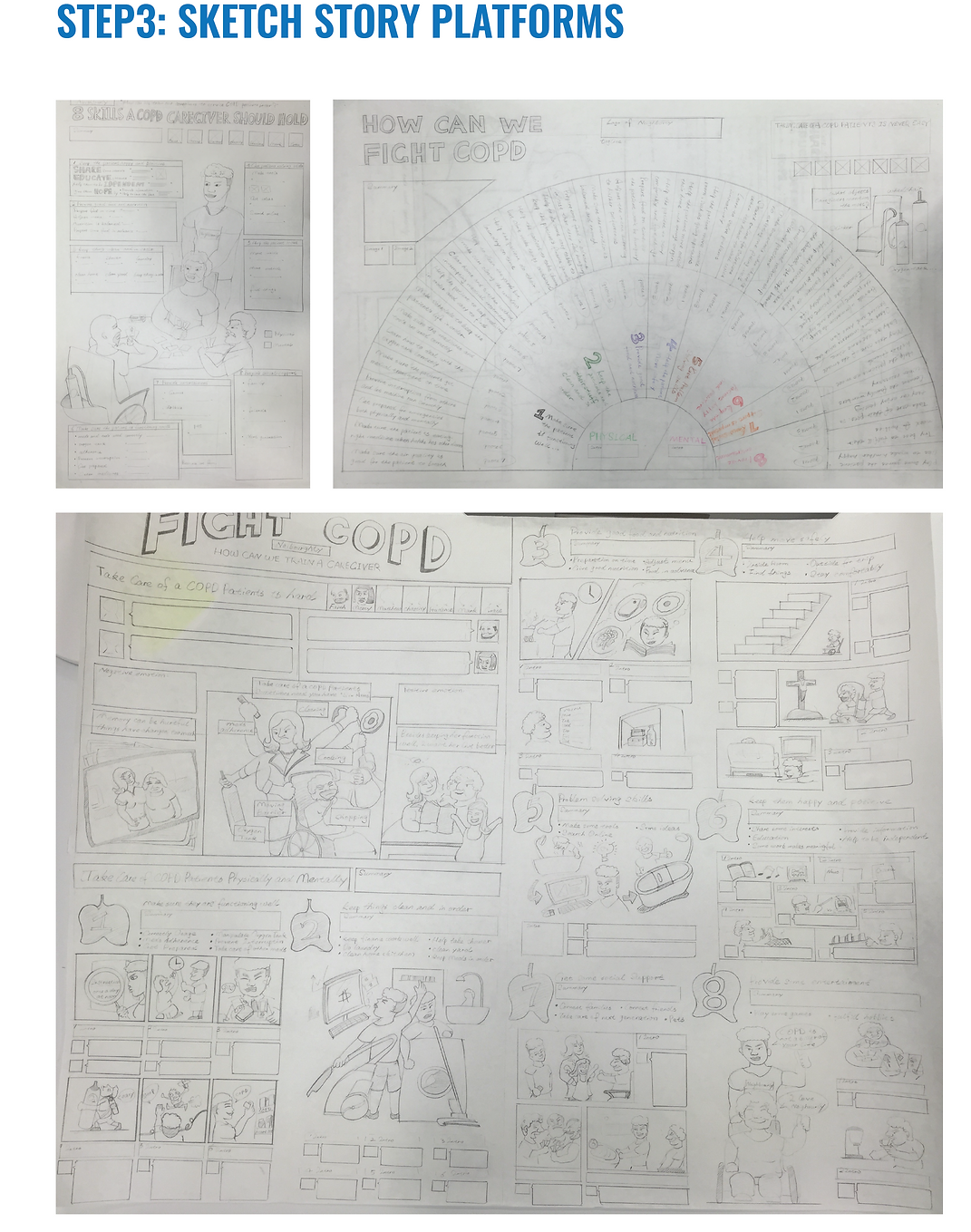
To help my insights and ideas prosper and in the client's environment, I gave a poster (story platform) to my client to take away and persuade their employees to buy in. I sketched three story platform ideas and I finally picked up one of them to continue.

PRESENT TO THE CLIENT
Presenting to client is always challenging. So according to my knowledge about my client, I designed a presentation which is interesting to them and also convey my thoughts in limited time.

COPD-01

COPD-02

COPD-15
COPD-01
1/15
bottom of page